X
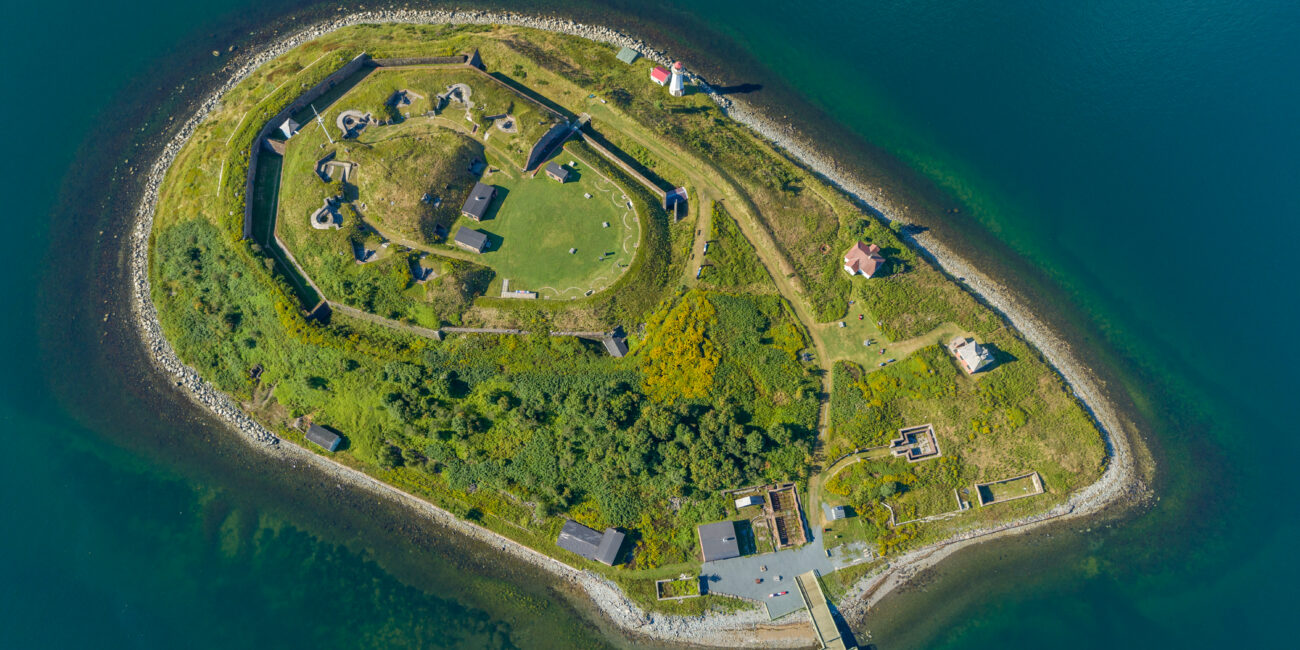
Take a 15-minute ferry ride to Georges Island National Historic Site, where a fortified, grassy landscape meets sweeping views of the Halifax Harbour and the city.
Walk through winding underground tunnels and discover how this small but strategically located island formed part of the Halifax Defence Complex. Although Halifax Harbour was never attacked, the island was fortified to help guard its narrow entrance. Along the way, uncover its darker history as an internment camp and prison for Acadians.
A Brief Military History of Georges Island
The British arrived in Kjipuktuk in 1749 to build the naval base of Halifax, aiming to counter the threat posed by the French stronghold of Louisbourg to New England. In honour of King George II, they named the island Georges Island and quickly began building fortifications to defend the harbour. It’s one of the five forts and batteries constructed by the British and Canadian militaries in Halifax that together form the Halifax Defence Complex.
During the War of 1812, British military authorities recognized Georges Island as key to the defence of the Halifax Harbour. In the early 20th century, responsibility for Halifax’s defences was transferred from the British to the Government of Canada. During the First World War, troops were stationed on the island, and anti-submarine nets were deployed on both sides to prevent German U-boats from entering the inner harbour. The last time soldiers served on Georges Island was during the Second World War, when an anti-aircraft unit was stationed there.
Construction of Fort Charlotte’s first major phase began on the island in the late 1790s, with a second major phase following in the 1860s. Today, the site and its tunnels, which visitors can explore, form a layered historical landmark rich with stories from different cultures and conflicts. Public visitation only began in 2020, finally opening the island to people eager to explore its deep history and understand its place in Halifax’s story.
Fort Charlotte
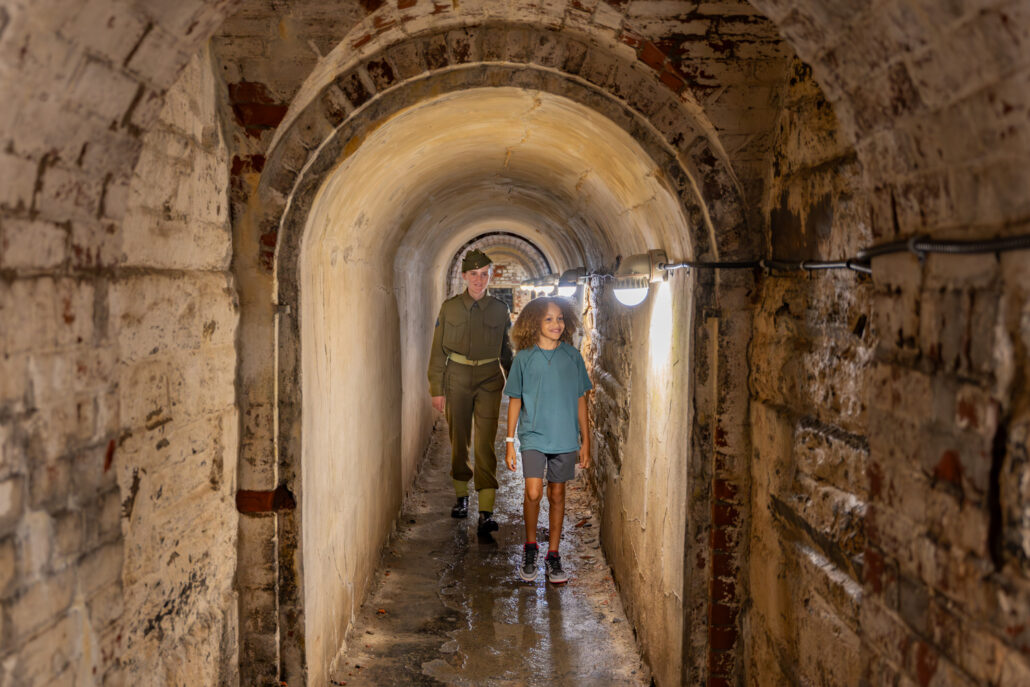
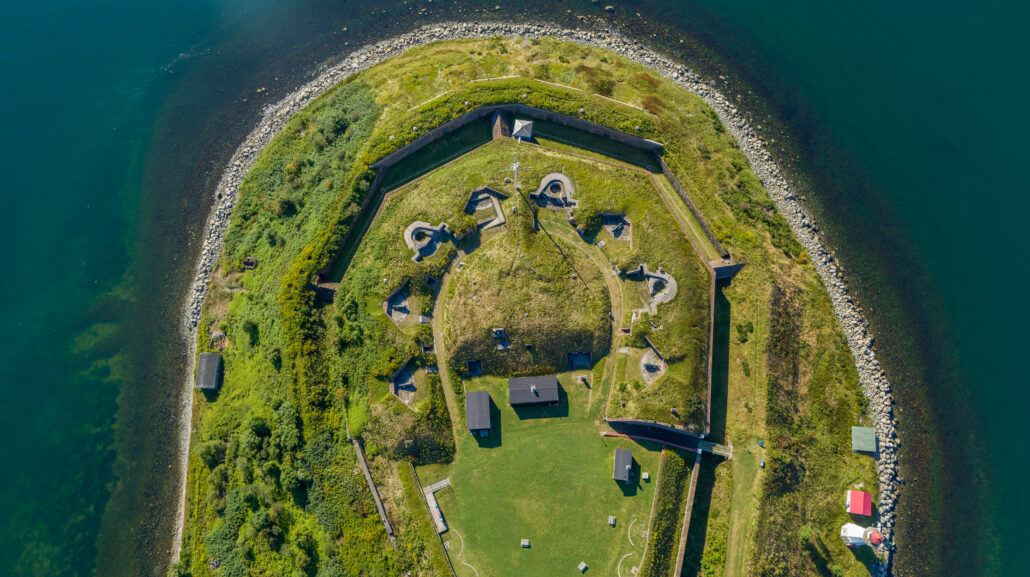
When you walk from the dock and head up the hill toward the arched tunnel entrance, you’ll know you’ve found Fort Charlotte. The fort dates back to 1798, and once inside, you’ll enter the magazine complex.
Walk through a protective network of underground tunnels that once stored ammunition for the Upper Battery. You’ll also see one of the last remaining pieces of the rail system that moved ammunition through the fort. Much of what’s on display dates from 1864 to 1873, when the fort was updated to support rifle muzzle loading (RML) guns.
These underground routes offer a glimpse into how the harbour would have been defended, even though it was never attacked. Along the way, you’ll see musket loopholes designed for firing, ditches built to trap intruders, RML guns, and caponiers, each with a specific role in protecting the fort.
A must-see is one of the RML cannons, positioned to aim through an opening toward the narrow harbour entrance. Its range extended far past McNabs Island, making it a crucial part of Halifax’s defence.
At the end of this part of the experience, at the top of the fort, you’re met with sweeping ocean views.
Beyond the Tunnels

Interpretive panels located around the island share the perspectives and histories of an Acadian prisoner during the Great Upheaval (1755–1764), as well as those of the Mi’kmaq and their use of the Halifax Harbour. You can also listen to the story of a young British soldier arriving on the island in the 1870s. Across the main road, learn about the island’s lighthouse, first built in 1876 and rebuilt after a fire destroyed it in 1916.
Nearly 1,000 Acadians were captured, brought to Georges Island, and detained in two sheds. Visit the site of the former prison sheds, where conditions were so harsh that some prisoners died. These sheds, along with other buildings that no longer exist, were used during the Upheaval. During this period, more than 10,000 Acadians were deported from New France, now known as Nova Scotia, New Brunswick, and Prince Edward Island. A map on display shows the distant places to which they were exiled.
Today, Georges Island is a quiet place to walk, look out over the harbour, and reflect. Its tunnels, views, and interpretive stops tell a layered story of defence, displacement, and resilience. A visit here offers a deeper understanding of Halifax’s past and a chance to see the harbour through many perspectives, all within a short ferry ride from downtown.