

In the middle of Halifax Harbour, McNabs Island offers a mix of history, hiking, sandy beaches, and even shipwrecks. It’s the kind of place where you can step away from the city and into a landscape that feels both wild and storied.
What to See and Do Here
The most significant landmark on the island is the Fort McNab National Historic Site. Built in the 19th century as part of the Halifax Defence Complex, the fort once helped guard one of the British Empire’s key naval stations and served as a counter-bombardment battery in the two World Wars. Today, you can wander among fort structures leading to sweeping harbour views, where the largest gun mounted in Halifax, a massive 10-inch breech loading gun, points seaward.
On the island’s northwestern point, Ives Point Battery (Fort Ives) showcases earlier British coastal defence technology, including rifle muzzle loading (RML) guns. Construction began in 1865 to help protect the inner harbour channel between McNabs Island and the York Redoubt National Historic Site. Here, the vegetation-covered stone walls stand out to you, with RMLs facing outwards. It remains the oldest surviving fortification on the island.
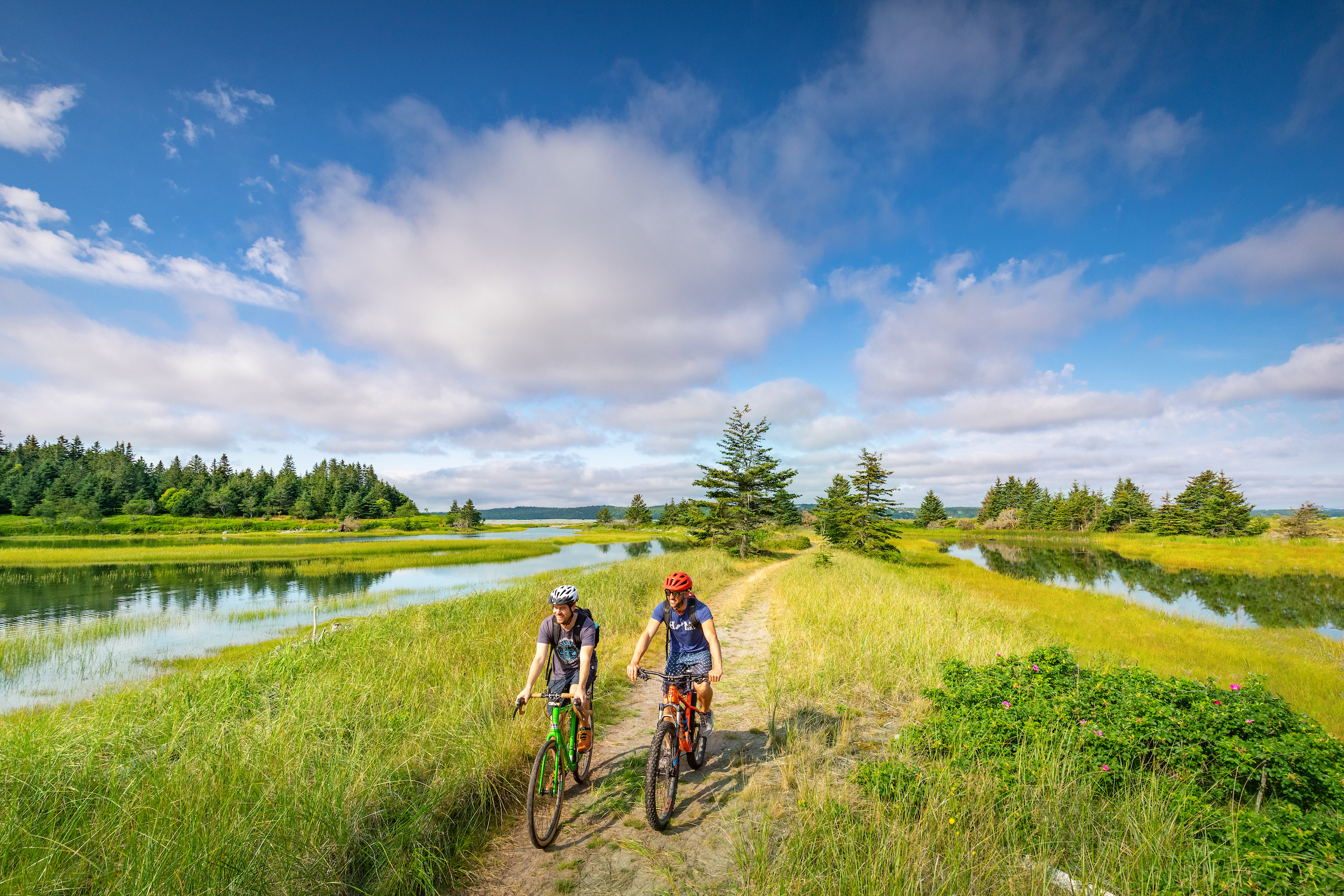
McNabs is also an island of trails. Winding through woods and open meadows, you’ll have several kilometres to explore before arriving at sandy beaches, such as Wreck Cove. Here, the tide lowers and reveals skeletal remains of a shipwreck, an eerie reminder of the harbour’s past.
Maugher Beach Lighthouse stands close to McNabs Cove, where executed criminals were once hanged, in gibbets as a warning to ships entering Halifax Harbour. It’s a beautiful spot with a sobering history, making it one of the more memorable stops on the island. The beach itself is next Garrison Pier, the main dock on the island.
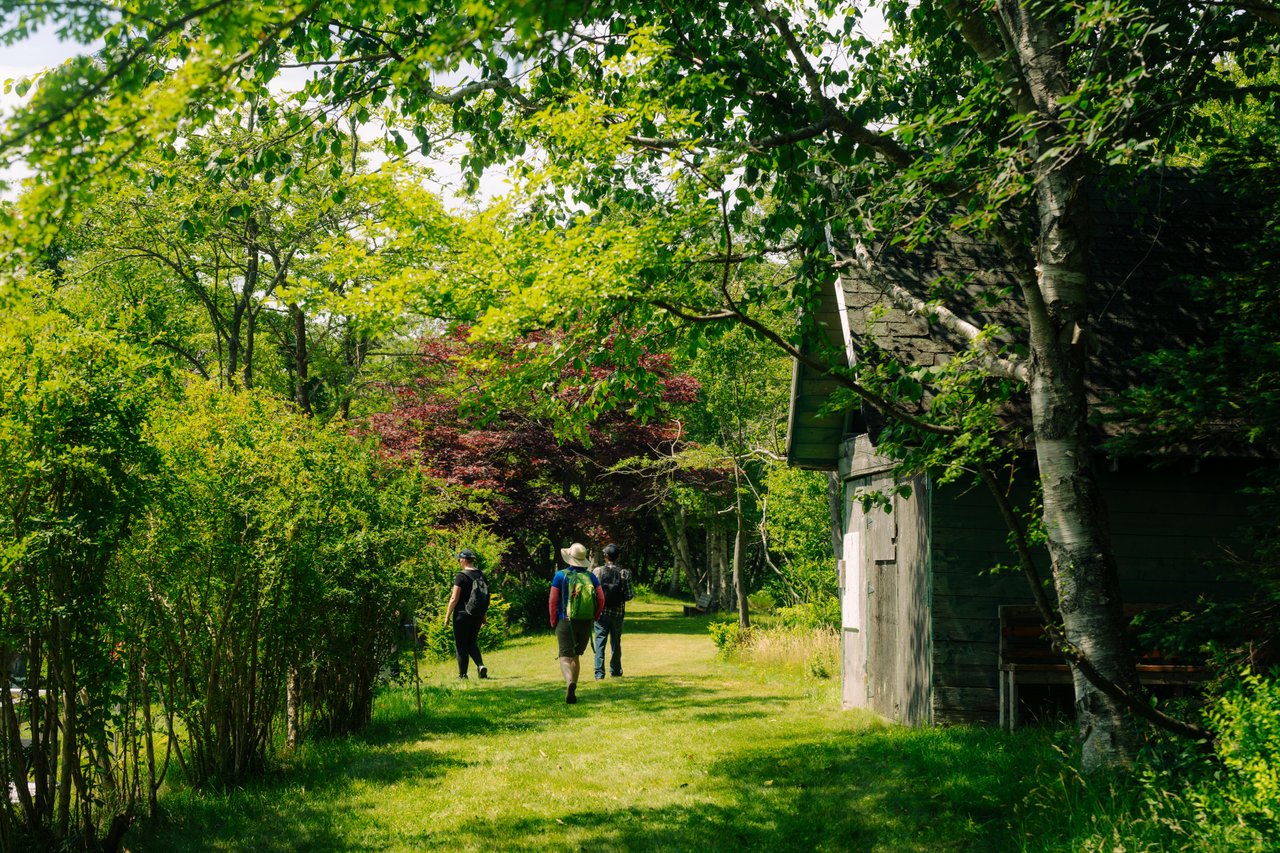
The Teahouse makes a great rest stop, whether you want to sit and relax or duck inside for shelter if the rain starts. Beside the Teahouse is the Hugonin-Perrin Victorian Garden, planted in the late 1800s. Japanese Maple, Horse Chestnut, and Copper Beech still grow here, creating a leafy and shaded space to pause and take in the scenery. Much of the rest of McNabs is heavily wooded, lending the island a quiet and untouched feel.
Walking through the trees comes with that unmistakable woodland scent and sense of solitude, especially around McNabs Pond, a tidal inlet framed by forest. Hay-scented and cinnamon ferns line the paths, while the steady rhythm of waves against the rocks carries through the air. The shoreline itself tells a story, which has changed over time, marked by storms and hurricanes.
As you wander further, the island reveals its wildlife: sandpipers along the shore, osprey and blue heron overhead, and the chance to spot bald eagles, whitetail deer, foxes, or snowshoe hares. With luck, you might even glimpse seals, and on rare occasions, harbour porpoises or whales just offshore.
Plan Your Visit
Tours & Experiences
- Guided tours with the Friends of McNabs Island Society begin with a 30-minute boat ride from Fisherman’s Cove in Eastern Passage and focus on themes like military history, shoreline ecology, or forest bathing.
- Local operators such as A&M Sea Charters, FlyteBoat, and Ambassatours, also offer trips to the island.
- You can also explore on your own by private boat or kayak, landing at Garrison Pier or one of the beaches.
- Runners can take part in the McNabs Half Marathon, held every July.
What to bring
- Wear comfortable walking shoes since you may cover 10k or more in a day.
- Bring plenty of water, food, snacks, a hat, and sunscreen, as there is no running water on the island.
- Protect against ticks by wearing light-coloured clothing, covering arms and legs, tucking pants into socks, and using repellent. Do frequent tick checks during and after your visit.
When to visit
- Summer visits are best started early to take in the fort, beaches, and lighthouse.
- Fall is the most comfortable season to explore, with cooler weather and colourful foliage.
- After your trip, enjoy food and ice cream at Fisherman’s Cove before heading back into the city.
Keep in mind
- Bicycles are allowed only on Garrison Road and Old Military Road.
- Composting toilets are available at the information kiosk near Garrison Pier, Ives Cove, and Fort McNab.
- A printed or digital map is helpful for navigating the island.
- There are no emergency facilities on the island.
Local Tip
Bring swimwear and take a dip at one of the beaches. The ocean is a welcome reward after a long, hot hike.
Should Know
-
AccessibilityAccessibility accommodations are not available.
-
DurationAllow for a full day.