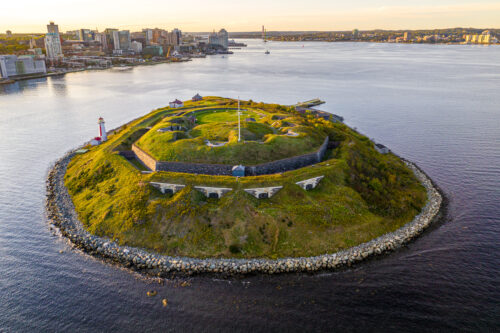


Experience Georges Island National Historic Site, where a fortified, grassy landscape meets sweeping ocean and city views.
Step into winding tunnels and discover how this small yet mighty island once protected Halifax as part of the Halifax Defence Complex—and uncover its darker role as an internment camp and prison for Acadians.
Things to See and Do
Step into the oval-shaped tunnel of Fort Charlotte, the oldest lasting fort on the island, and you’ll find yourself in the magazine complex. Walk through the protective network of underground tunnels used to store ammunition for both the Upper and Lower Batteries. You’ll also see one of the last existing components of the rail system that once moved ammunition through the fort.
These underground routes offer a glimpse into how the harbour would have been defended, although never actually attacked. Observe musket loops designed to fire through, ditches carved to trap intruders, rifled muzzle-loading guns, and caponiers—each with a specific role in defending the fort.
A must-see is the smoothbore cannon, aimed through an aperture toward the narrow harbour entrance. Its range extended far past McNabs Island, making it a crucial part of Halifax’s defence.
You’ll end your experience of this part of the island at the top of the fort, where you’re met with stunning ocean views.
Beyond the tunnels, pause at the interpretive panels sharing the perspectives and history of an Acadian prisoner during the Great Upheaval of 1755–1764, the Mi’kmaq people, and Canadian Garrison Artillery during the First World War. You’ll also learn about the island’s lighthouse, originally built in 1876 and reconstructed after a fire destroyed it in 1916.
Learn about the near 1,000 Acadians who were captured, brought to, and detained in two sheds on Georges Island. Visit the site of the former prison sheds where the conditions were so dire that many prisoners died. These sheds—and other buildings that no longer exist—were used during the Upheaval. Over 10,000 Acadians were deported from New France (now known as Nova Scotia, New Brunswick, and Prince Edward Island) during this time. A map on display shows the distant places to which they were exiled.
Planning Your Visit
How to get there
- Reach Georges Island by ferry with Ambassatours from Cable Wharf on the Halifax Waterfront. Ticket includes Parks Canada admission.
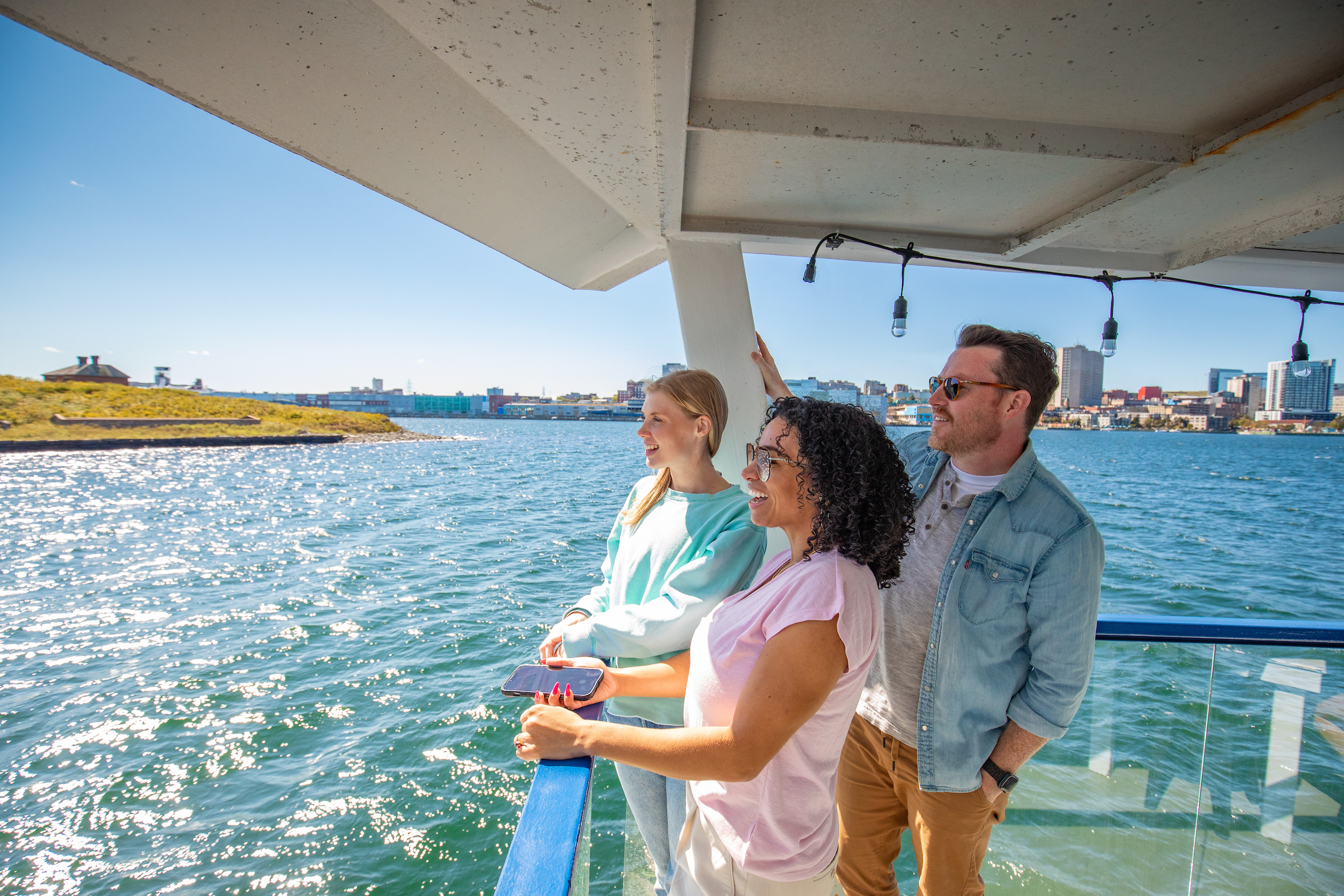
- The ferry ride takes 10–15 minutes and offers great views of Downtown Halifax, Dartmouth, and the harbour.
- Adventurous visitors can arrive by kayak, canoe, or private boat. Harbour Watercraft Tours & Adventures runs a 2.5-hour guided kayak tour that circles the harbour and lands on the island.
Tunnel tours
- Join guided tunnel tours, included with admission, running every 20 minutes for 15 minutes. French tours available on request.
- Explore tunnels on your own with a self-guided tour.
- Meet guides in Second World War uniforms at Fort Charlotte and learn about the British experience and Halifax Defence Complex.
What to bring
- Enjoy a picnic on the grass or at tables—bring your own or pre-order one from Parks Canada to pick up with your ferry ticket.
- Since there are no shops or cafés, bring water and supplies.
- Wear sturdy shoes for damp, slippery tunnels, and ones you don’t mind getting a bit muddy.
- Pack sunscreen, a hat, layers, or a rain jacket depending on the weather.
- Expect cool winds off the harbour even on warm days.
- Always check the weather forecast before your visit—tours may be cancelled in bad weather.
Insider Tip
Georges Island is open from June to October.
Should Know
-
AccessibilityAmbassatours Gray Line will make every effort to ensure ramps and mobility friendly transitions are available during the embarkation and disembarkation process. Georges Island has pathways, but the fortress itself has steps and steep ditches.
-
DurationAllow for half a day to visit Georges Island. This includes travel time to and from the island by boat, and 1-2 hours to explore the island.