
X
Few cities are as closely tied to the legacy of the Titanic as Halifax. In the aftermath of the disaster, the city played a vital role in the recovery of the victims, leaving behind a rich and moving history that visitors can still explore today. Through exhibitions and guided tours, Halifax offers a window into the human stories behind one of the world’s most famous maritime tragedies.
Discovering the Connection
Halifax’s deep maritime history includes a significant role in the events following the Titanic shipwreck in April 1912, which claimed more than 1,500 lives. As the nearest major seaport, the city became the centre of the recovery efforts and the primary destination for the victims brought from the North Atlantic.
White Star Line, the Titanic’s owner, chartered four vessels—CS Mackay-Bennett, CS Minia, CGS Montmagny, and SS Algerine—to retrieve the bodies from the ocean. Of the 337 recovered, 119 were buried at sea, and 209 were brought back to Halifax, to the Mayflower Curling Rink, which had been transformed into a temporary morgue. Fifty-nine were identified and sent home to their families. The remaining 150, the largest number of Titanic victims buried in one city, were laid to rest in Halifax.
They were interred in three cemeteries: Fairview Lawn Cemetery (121 victims), Mount Olivet Catholic Cemetery (19 victims), and Baron de Hirsch Jewish Cemetery (10 victims). These sites have remained important places of remembrance, drawing visitors interested in the Titanic story.
Many of the victims were identified through personal effects, clothing, or documents, allowing them to receive named headstones. Those who could not be identified were given numbered markers; approximately 40 individuals remain unidentified to this day.
Although Halifax was geographically closer to the disaster site, ice prevented the rescue ship Carpathia from reaching the city, and New York City, the Titanic’s intended destination, received all the survivors.
Interesting Fact
The Titanic struck an iceberg while heading to New York on April 14, 1912, at 11:40 pm ship’s time. The vessel sank at 2:20 am on April 15, roughly 700 nautical miles (1,296 kilometres) east of Halifax. Just over 700 survivors disembarked in New York City on April 18.
The Account of the Unsinkable Ship
The Maritime Museum of the Atlantic serves as a gateway to the region’s naval, wartime, and cultural history. Its permanent exhibit, “Titanic: The Unsinkable Ship and Halifax,” is central to telling the story of the tragedy. The exhibit invites visitors to explore the Halifax connection to Titanic, particularly the coastal community’s response in the immediate aftermath of the disaster. The museum houses over 50 Titanic artifacts, including historic photographs, personal effects, and wreckwood objects (fragments of shipwrecks as reminders or commemorative objects). The exhibit provides visitors a glimpse of being on board—from the crew working the boilers to immigrants travelling in third class and first-class passengers enjoying every comfort.

Interesting Fact
The wreckwood collection for “Titanic: The Unsinkable Ship and Halifax” is so historically significant that researchers from the film Titanic (1997), including creator James Cameron, visited the museum in preparation for filming.
The Ships of Halifax
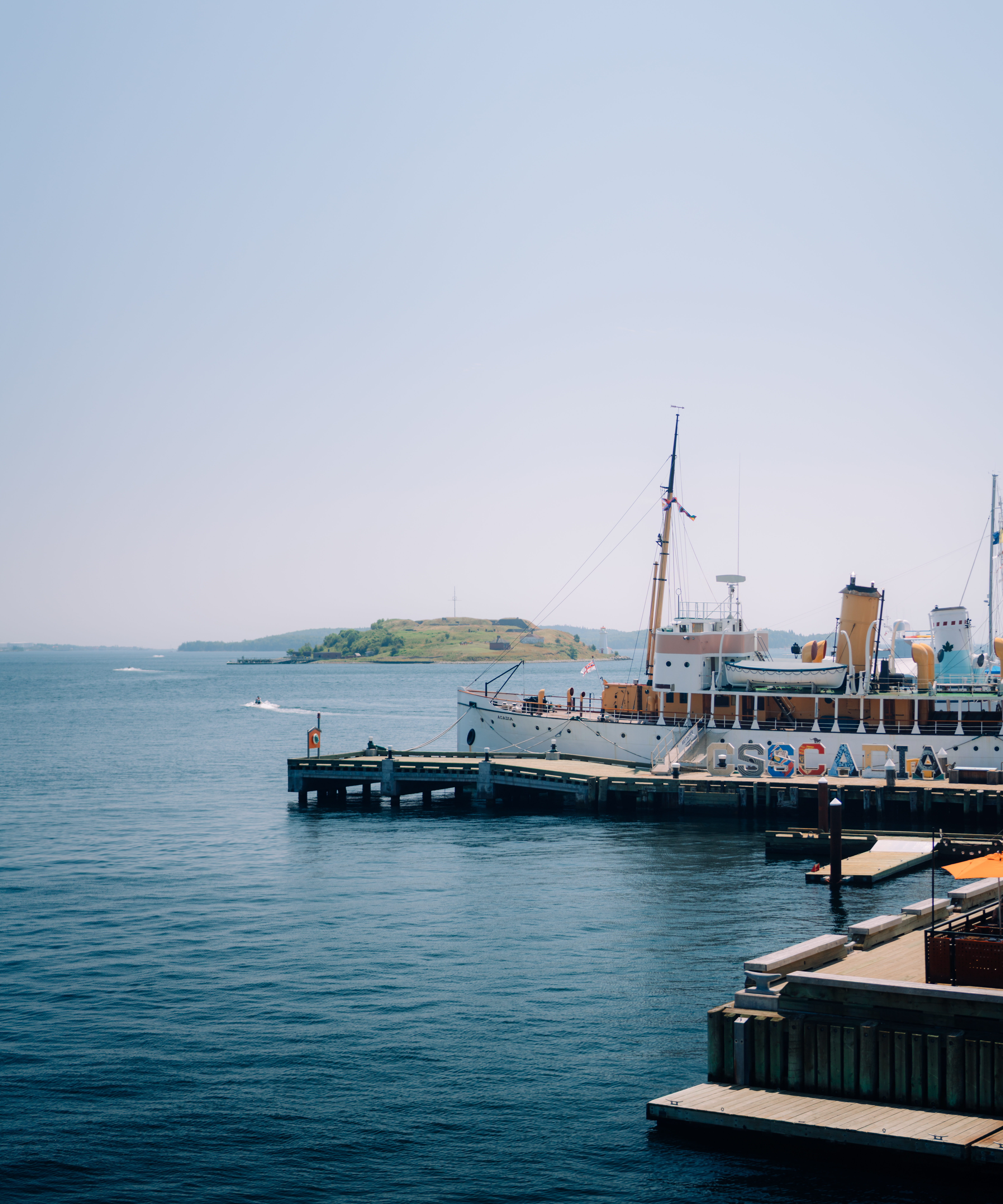
Halifax’s naval heritage comes to life aboard two historic vessels anchored outside the Maritime Museum of the Atlantic: CSS Acadia and HMCS Sackville.
CSS Acadia is the only surviving ship to have served in the Royal Canadian Navy during both world wars—and the last vessel still afloat to have endured the Halifax Explosion. Visitors can explore its decks or join guided tours during the summer and fall seasons. Museum admission includes access to the ship.
HMCS Sackville, Canada’s Naval Memorial, is the last surviving Flower-class corvette of the Second World War. Commissioned in 1941, it served in the Battle of the Atlantic and is celebrating its 85th anniversary this May. A National Historic Site, it offers tours and stands as a testament to Canada’s nautical heritage.
Titanic Experiences
Halifax Titanic Historical Tours – Historic Halifax Tour
Enjoy a comprehensive six-hour tour of Halifax’s history, featuring its most iconic sites and key locations connected to the Titanic story, including Fairview Lawn Cemetery, Mount Olivet Catholic Cemetery, and the former home of George Wright, a Halifax philanthropist who perished in the tragedy at age 62.
Anchor Tours – Peggy’s Cove and Titanic Graveyard Tour
Take a half-day tour to the iconic Peggy’s Point Lighthouse before paying your respects to the 121 Titanic victims laid to rest at Fairview Lawn Cemetery.
Down East Tours – Halifax Titanic and Fisherman’s Cove
Experience a five-hour private tour exploring Halifax’s Titanic connections, visiting Fairview Lawn Cemetery, and enjoying Fisherman’s Cove, a restored 200-year-old fishing village with a scenic boardwalk and unique shops.