X
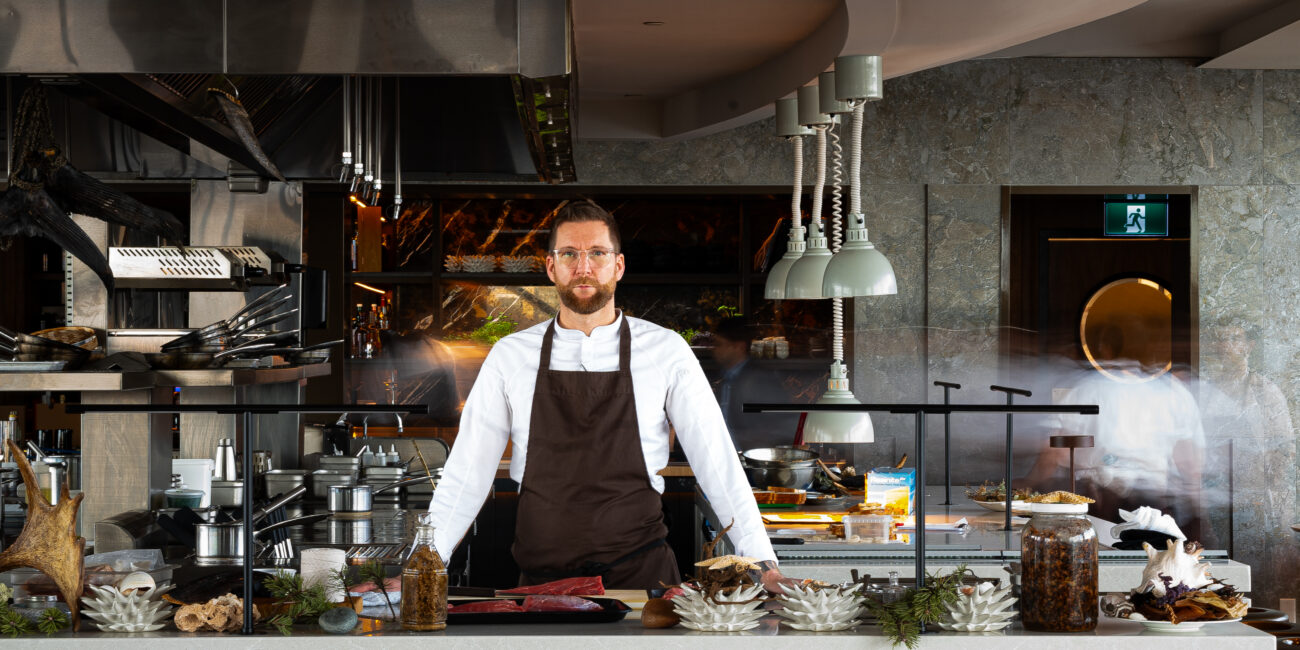
At Mystic, Chef Malcolm Campbell translates Nova Scotia’s climate, coastline, and quiet drama into a cuisine that feels both elemental and refined. Drawing on experience from Michelin-starred kitchens in London and France, Campbell cooks with reverence rather than rigidity, allowing land and sea to guide each course of Mystic’s Fauna, Biota, and Discovery menus. It’s an experience that feels like a living conversation with place.
Since opening in the fall of 2024, Mystic has quickly earned international recognition, including Canada’s Best New Restaurant and Dish of the Year by Air Canada, and North America’s Best New Restaurant by the World Culinary Awards. Yet what resonates just as deeply is the experience around it: a dining room where service is practiced with intention, warmth, and precision, and where a sense of place is felt in every detail. At Mystic, hospitality and cuisine move together, shaped by the rhythms and elements of Nova Scotia, and the people who bring it to life.
Mystic feels less like a restaurant and more like a living expression of place — weather, tide, and terrain all seem to guide the menu. What does “sense of place” mean to you as a chef, and how does the land and sea around Halifax shape the way you cook?
To me, sense of place is the act of listening before cooking. It’s understanding that food doesn’t start in the kitchen — it begins in nature: the soil, the temperature of the water, the people who harvest, and the rhythms of a coastline. Here in Halifax, the environment isn’t a backdrop; it’s a collaborator. The tide dictates which seaweeds are at their peak, weather shifts change which fish arrive at the dock, and the forests and barrens shape flavours of salinity, smoke, acidity, and resilience. Cooking here means embracing those constraints and letting them guide creativity. I ask what the land is insisting I cook, and what the ocean is offering.
Your restaurant was just named the Best New Restaurant in Canada, and even North America, this year. How did you approach creating a dining experience that resonated so deeply with guests?
From the beginning, we didn’t set out to win awards — we set out to build something honest. Mystic was designed to feel both grounded and transportive: a place where guests could experience the Atlantic in a way that wasn’t romanticized, but deeply felt. We focused on intimacy, storytelling, and pushing boundaries without losing simplicity, while always respecting ingredients and animals.
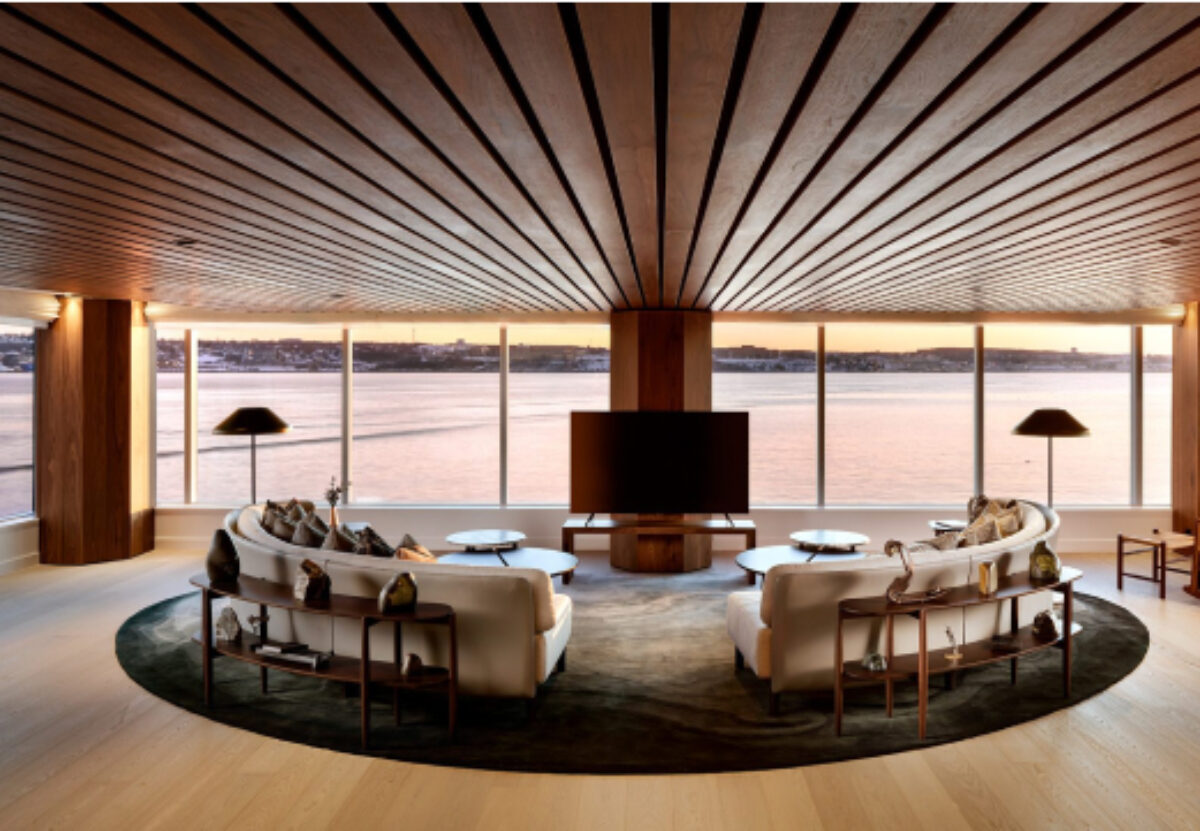
Every choice was made to create an emotional arc: dishes that surprise, moments that slow the meal down, flavours that evoke childhood memories — or memories guests didn’t know they had. The service, the space and design, the location and the views — everything was done to make Mystic feel special. The goal wasn’t to impress; it was to connect. I think that resonance, combined with a restaurant that truly belongs to its environment, allowed people to feel something memorable. If guests walk away not just saying that was delicious but saying I’ve never tasted that sense of place before, that’s what we strive for.
Mystic’s pre-service routine, from the tasting sessions to the one-on-one learning, feels almost like an atelier. Why is education such a central pillar of your kitchen, and how does that constant exchange shape the guest experience?
Education is at the heart of Mystic because food is a living craft. It evolves daily. If we stop learning, we stop paying attention. Our pre-service routine — tasting, teaching, discussing — creates a shared vocabulary among the team. When a cook understands not just how to execute a dish but why it tastes the way it does, or why a certain sea herb is only harvested in the last week of June, they develop a deeper respect for the process.
That internal culture of curiosity shows up on the plate and in the dining room. Guests can taste intention. When they ask questions, the team can speak with authenticity because they’ve been part of the conversation, not just the execution. The kitchen operates more like an atelier because we’re collectively developing our craft, not repeating tasks. The result is a dining experience that feels alive, thoughtful, and genuinely connected to the ingredients and the biota of Nova Scotia.