X
Few foods are as deeply tied to a place as lobster is to Nova Scotia. From the cold, nutrient-rich waters of the Atlantic to the hands of thousands of independent harvesters, every Nova Scotia lobster carries centuries of history, extraordinary biology, and a flavour that has made it one of the world’s most sought-after seafood delicacies. Whether you're a lifelong lover of the crustacean or just beginning to explore what makes Nova Scotian lobster so special, here's everything worth knowing.
What Exactly Is Nova Scotia Lobster?
Nova Scotia lobster is the Atlantic lobster (Homarus americanus), the same species fished along the entire North American Atlantic coastline from Labrador to North Carolina. It belongs to the family Nephropidae, the “true lobsters.” It has two large, asymmetrical claws (a crusher claw and a pincher claw), a long segmented body, and a hard shell that turns bright red when cooked. In its natural habitat, it ranges in colour from dark brown to olive green, providing excellent camouflage for the rocky ocean floor.
What makes Nova Scotia’s share of this species special is the environment in which it is raised: the cold, clean, nutrient-rich waters off one of the world’s most productive marine ecosystems.
A Brief History
Long before European settlers arrived, the Mi’kmaq people of Atlantic Canada had been fishing lobster for centuries. Their relationship with Wolum Keeh, as the lobster was known in their language, went far deeper than simply catching it for dinner. The Mi’kmaq used every part of the lobster: as a food source, as fertilizer for crops, and for ornamental purposes. A lobster claw, for instance, served as a tobacco pouch. Lobsters were so plentiful in those days that they were regularly found on beaches at low tide and washed ashore after storms.
Before lobster traps came into use, fishermen caught lobster by spearing them in shallow water or luring them out with bait. Wire traps eventually replaced these early methods and became the foundation of the fishery still used today.
Because of its abundance, lobster was not considered a valued commodity for much of early history and was regarded as a poor man’s food. It wasn’t until the second half of the 19th century that the lobster’s status was elevated, becoming a sought-after delicacy.
Nova Scotia Lobster and Its Cousins
Nova Scotia lobster is the Atlantic lobster (Homarus americanus), the same clawed lobster found along North America’s Atlantic coast. Its closest relative is the European lobster (Homarus gammarus), which has a distinctive blue shell before cooking and a slightly firmer, brinier flavour.
Freshwater crayfish are another relative, but they’re much smaller and live in rivers and lakes rather than the ocean. While they’re popular in many parts of Europe, they’re a very different eating experience from Atlantic lobster.
The Flavour Profile: What Makes Nova Scotia Lobster Taste So Good
The secret to Nova Scotia’s legendary lobster isn’t a recipe or a technique; it’s the ocean itself. Nova Scotia’s cold, nutrient-rich waters slow a lobster’s metabolism, creating the dense, sweet meat Atlantic lobster is known for. Warmer waters, by contrast, speed up metabolism and can result in softer, less flavourful meat.
Nova Scotia lobster is prized for:
- Sweetness: a natural, clean sweetness without fishiness, especially pronounced in fresh, live-cooked lobster.
- Firmness: dense, meaty texture that holds up beautifully whether steamed, grilled, or poached in butter.
- Hard shells: Nova Scotia lobsters are renowned for their hard shells, which are a sign of a high meat yield (compared with recently moulted “soft-shell” lobsters, which have a higher water content).
- Claw meat: unlike warm-water lobster varieties (such as the spiny/rock lobster common in Australia and the Caribbean, which have no claws at all), Nova Scotia lobster has large, meaty claws often considered the best part of the animal.
- Nutritional value: it’s high in protein, rich in omega-3 fatty acids, and low in saturated fat.
7 Fascinating Facts About Lobster
Nova Scotia lobster is one of the most biologically remarkable creatures in the ocean. Here are some facts that might surprise you:
1. The world’s largest lobster ever recorded was caught in Nova Scotia. A specimen caught off the coast of Nova Scotia in 1977 weighed 20.14 kilograms (44 lbs 6 oz) and measured over a metre in length, making it the heaviest marine crustacean ever recorded, according to Guinness World Records. It was estimated to be over 100 years old at the time of its capture.
2. Lobsters keep growing their entire lives. Unlike humans or most other animals, lobsters never truly stop growing. They undergo a process called moulting, where they shed their entire exoskeleton to grow a new, larger one. This growth continues throughout their lives and is one of the reasons individuals can grow so large and live for so long.
3. They have a remarkable anti-aging enzyme. Lobsters produce an enzyme called telomerase throughout their entire adult lives, which is something that most other animals, including humans, stop doing in early adulthood. Telomerase repairs the ends of chromosomes, slowing cellular aging and contributing to the lobster’s long lifespan. American lobsters (Homarus americanus) have been known to live over 100 years.
4. Lobsters aren’t red until you cook them. In their natural habitat, Nova Scotia lobsters are dark brown or olive green, providing camouflage among the rocky ocean floor. Although incredibly rare, these lobsters can sometimes also be yellow or blue in colour. The bright red colour only appears when they’re cooked. European lobster is naturally blue, which is why French homard breton has its distinctive appearance before cooking, though it, too, turns red once cooked.
5. Lobster was once considered a poor man’s food. As hard as it is to believe today, lobster spent centuries as one of the most looked-down-upon foods in North America. Lobsters were so abundant along the Atlantic coastline that they were fed to prisoners, servants, and the poor, and lobster shells around a home were considered a sign of poverty and degradation. It wasn’t until the second half of the 19th century that lobster began its remarkable transformation into the luxury it is today.
6. Female lobsters can carry up to 100,000 eggs. A female lobster carries fertilized eggs on the underside of her tail for 9 to 12 months before they hatch. The number of eggs can reach 100,000 in larger, older females, but only around two of every 50,000 eggs are expected to survive to legal size. Nova Scotia’s fishery regulations protect egg-bearing females, called “berried hens” — any caught must be immediately returned to the sea, and a notch is cut into the tail to permanently mark her as a protected brood female.
7. Nova Scotia’s fishery is one of the most sustainable in the world. Nova Scotia’s lobster fishing grounds are Marine Stewardship Council (MSC) certified, a globally recognized mark of responsible, sustainable fishing. Generations of harvesters have worked these waters with care, and that tradition continues today. So, when you sit down to a Nova Scotia lobster, you can savour every bite knowing that what’s on your plate is not only extraordinary, it’s something the ocean can keep giving for generations to come.
Eating Lobster in Halifax
One of the best things about visiting Halifax is that lobster is everywhere. There’s even a Nova Scotia Lobster Trail with its own passport that can be stamped and entered to win prizes. It’s accessible, and it comes in more forms than you might expect. Here’s how locals and visitors alike enjoy it.
Traditional Lobster Supper
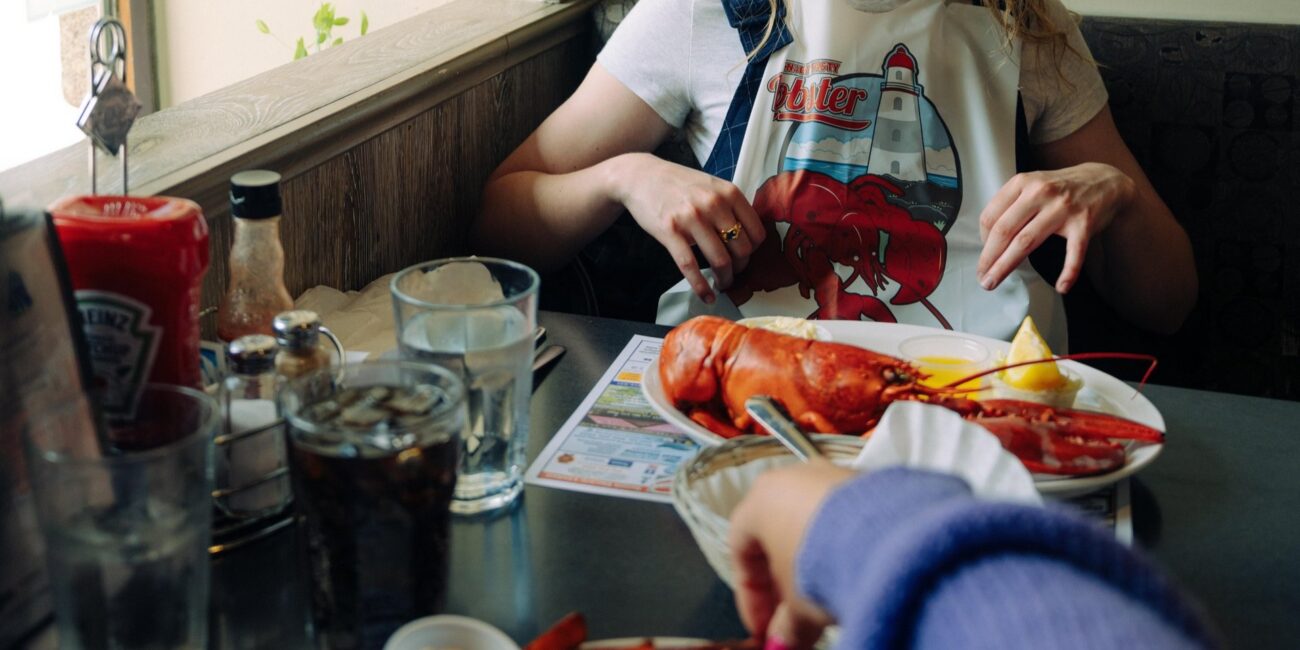
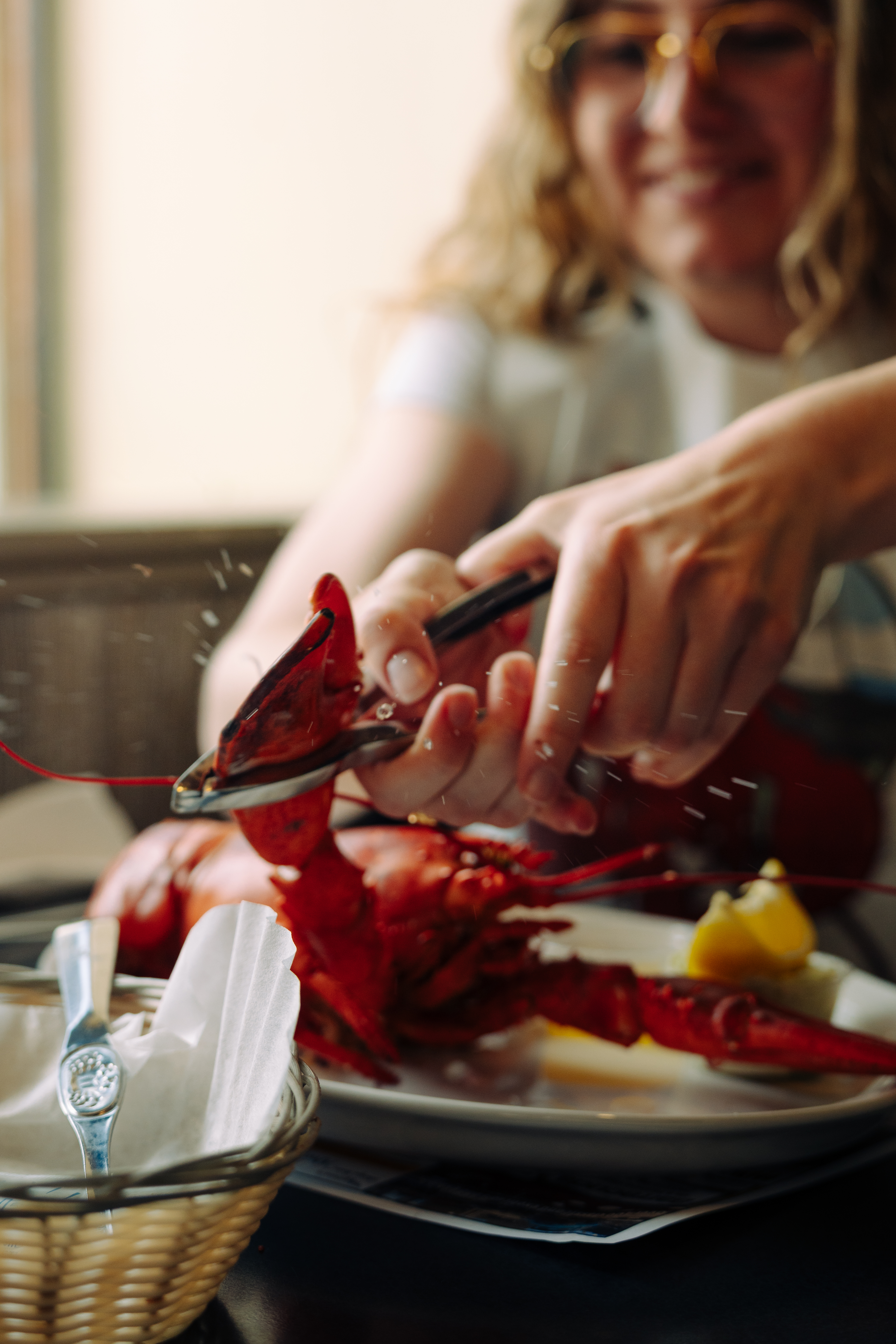
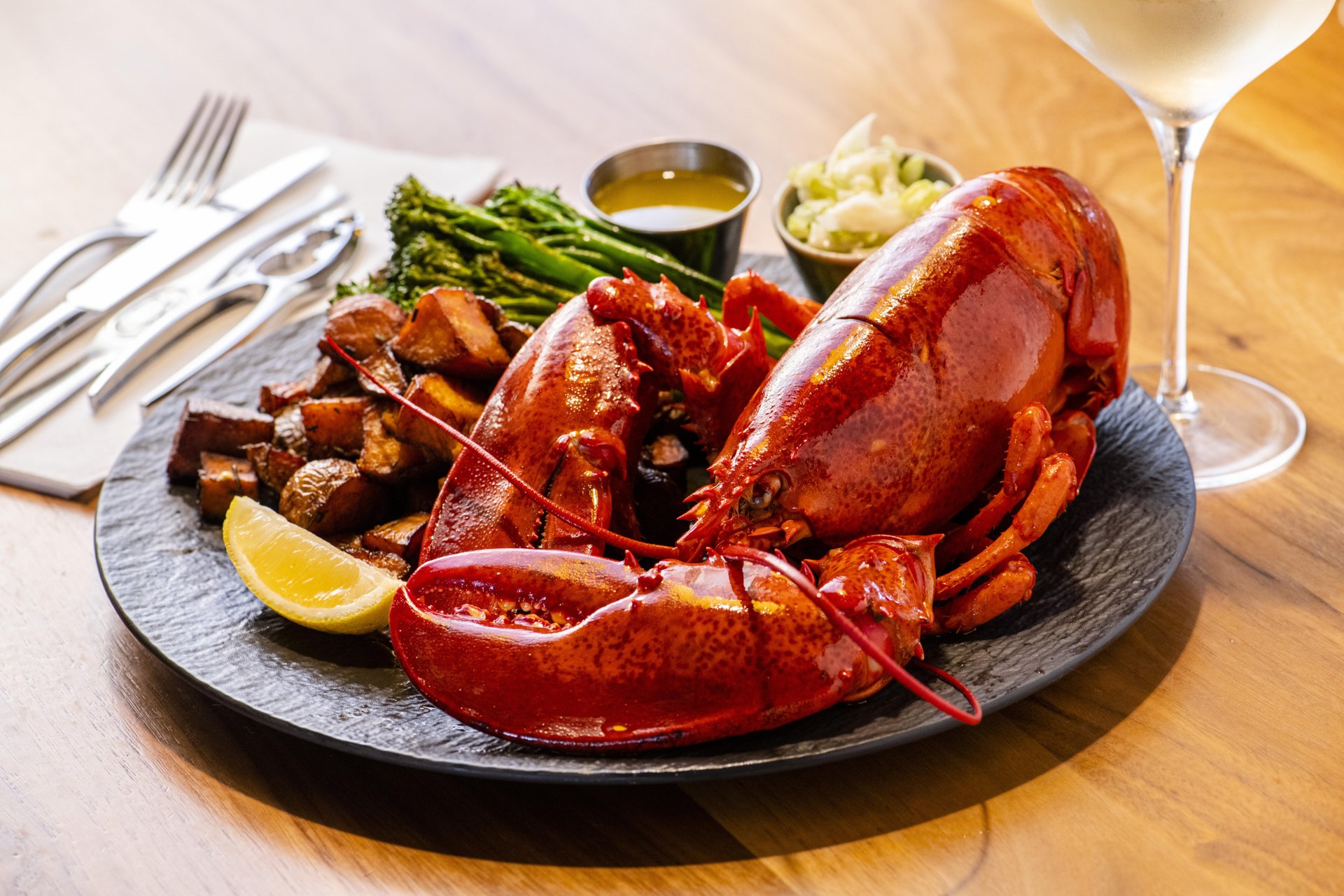
This is the classic Nova Scotia experience, and it’s exactly as straightforward as it sounds. A whole, freshly steamed or boiled lobster arrives on your plate with melted butter, a wedge of lemon, and usually a side of potato salad, coleslaw, and a roll. You’re given a bib, a cracker, and a pick, and then you get to work. The claws are often pre-cracked for you. The atmosphere is communal and unfussy, with checkered tablecloths, the smell of the ocean, and no pressure to be fancy about it. Many Halifax restaurants keep live lobsters in saltwater tanks and cook them to order, so freshness is essentially guaranteed. Pair it with a glass of Nova Scotia Tidal Bay wine for the full experience.
Lobster Roll
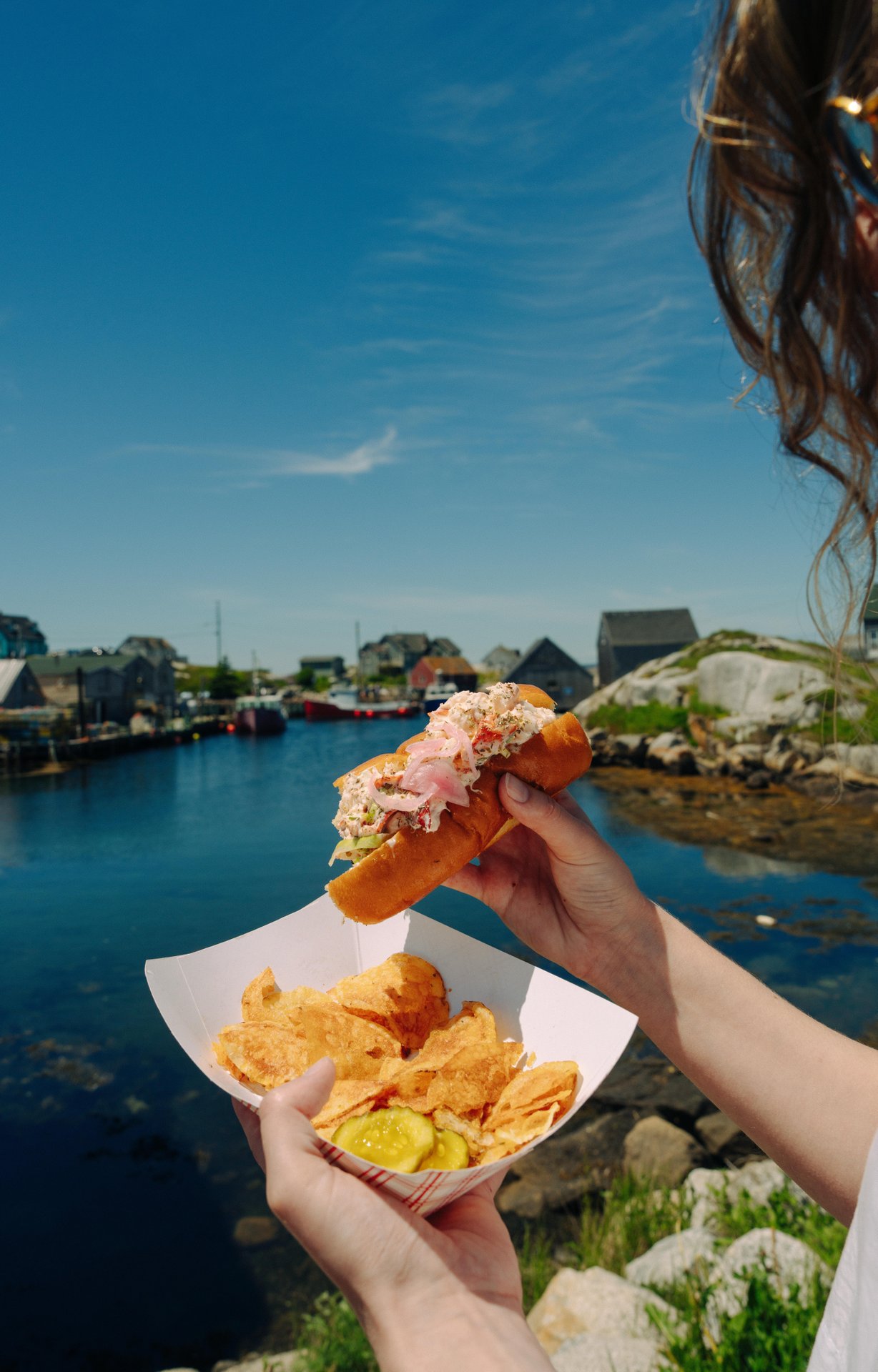
You’ll find lobster rolls all over Halifax, and the debate over which style is best is taken seriously here. The cold version is a Maritime classic, where fresh lobster meat is tossed with mayo, celery, and sometimes a touch of dill, chives, or parsley, and piled into a buttery, toasted split-top bun. The hot version is served with warm lobster meat drizzled in drawn butter, letting the natural sweetness of the lobster do the talking. Many spots in Halifax offer both options, so you don’t have to choose.
Seafood Chowder
Nova Scotia seafood chowder is a meal in itself. It’s typical to see a rich, creamy broth loaded with lobster, scallops, haddock, and mussels, often with potatoes, celery, and carrots. It’s served at restaurants across Halifax and is one of those dishes that gives a true taste of place. Some kitchens add a smoked element, while others keep it clean and classic. Either way, a bowl of chowder with a biscuit on the side is one of Halifax’s coziest dishes.
Lobster Cakes
Similar in concept to a crab cake, lobster cakes are pan-fried patties made with fresh lobster meat, bound with a light filling and seasoned simply so the lobster flavour stays front and centre. They show up on menus across Halifax, often served with remoulade or house-made aioli, making for a great appetizer or lighter meal.
Lobster Poutine
This is Nova Scotia’s twist on one of Canada’s most beloved comfort foods. Instead of the traditional gravy, lobster is sautéed in butter, finished with a splash of cream, and poured over house-cut fries and cheese curds. It’s rich, hearty, and will leave you feeling full for hours.
Lobster Mac & Cheese
This comfort food shows up on casual and upscale menus across Halifax. Creamy, cheesy pasta is elevated with generous chunks of fresh lobster.
Lobster Bisque
A rich, velvety soup made from lobster stock, cream, and a touch of brandy or sherry. Where seafood chowder offers a taste of fresh lobster, bisque captures the full essence of the shellfish.



Where to Eat Nova Scotia Lobster in Halifax
Ready to try it for yourself? Here are a few great places to enjoy fresh lobster in the Halifax region.
Shore Club in Hubbards
Shaw’s Landing in West Dover
Bluenose II Restaurant in Downtown Halifax
The Five Fishermen in Downtown Halifax
McKelvie’s Restaurant in Downtown Halifax
Water Polo Restaurant on the Halifax Waterfront
The Bicycle Thief on the Halifax Waterfront
Evan’s Seafoods on the Dartmouth Waterfront
Tom’s Lobster Shack in Peggy’s Cove
FAQ