X
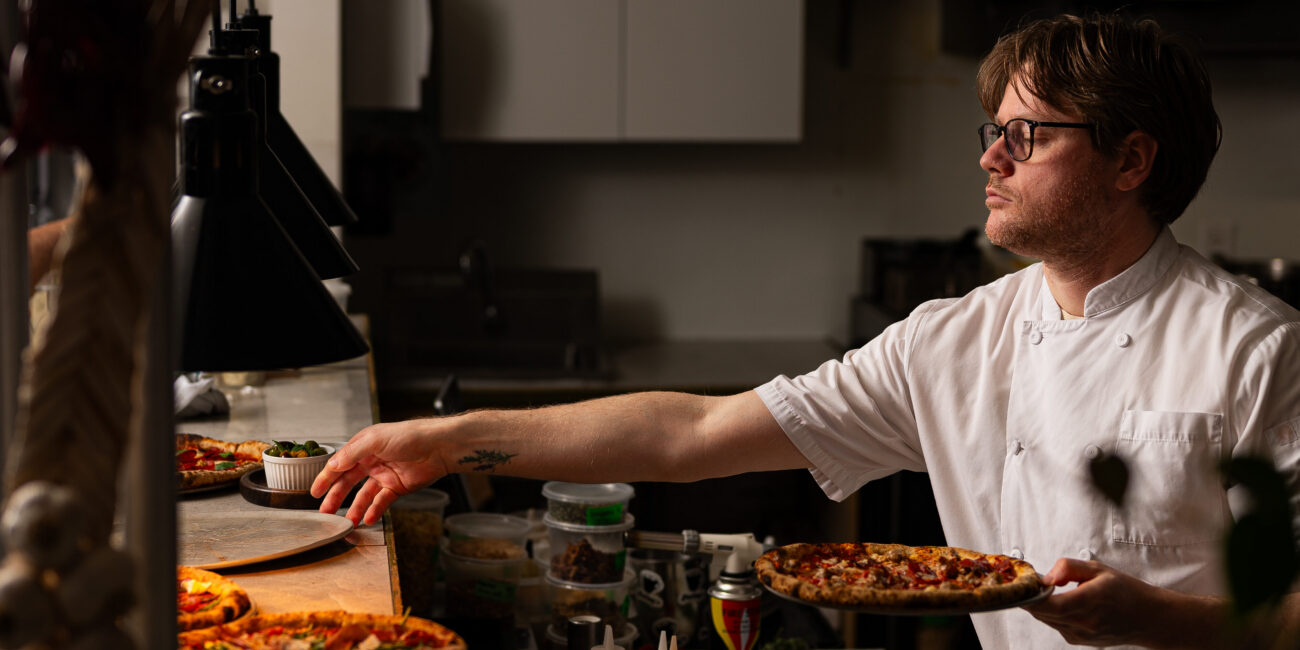
Born in Marseille and trained by tradition, Cédric Toullec approaches pizza as both craft and inheritance. At Lou Pécou, his 72-hour slow-fermented sourdough and uncompromising respect for ingredients honour the lessons of his grandmother and the rituals of Provençal markets, translated through Nova Scotian terroir. Each pizza is shaped by patience and care, allowing seasonality and simplicity to drive the menu.
While rooted in tradition, Lou Pécou is equally shaped by its environment. Toullec has taken the time to understand Halifax’s culinary pulse, adapting time-honoured technique to local foodways. That balance of heritage and locality has earned global acclaim: in 2025, Toullec was named the 93rd best pizzaiolo in the world, representing Canada alongside just one other chef.
You were recently honoured as one of the world’s top pizzaiolos. What do you think sets your pizza apart on a global stage, and how do you blend that world-class technique with Halifax’s local flavours?
Everything starts with the flour. You can be the best cook in the world, but at the highest level of pizza making, that won’t save you if you don’t understand the grain. Our distinction comes from our proprietary flour blend and the deep relationships we’ve built with our millers and suppliers. We don’t just open a bag; we know the harvest, we understand the protein and everything else that comes with it, we respect the raw material.
Toppings, at the end of the day, are just toppings, but the soul of the pizza and a pizzeria is the dough. My main focus is shifting that perspective. Is it light? Is it digestible? Did I have to drink a lot of water after I ate at this pizzeria? That is the real craft.
As a master bread-maker hailing from Marseille now based in Halifax, what moments of Southern French culinary culture do you feel compelled to preserve? How do you weave those memories into a city with its own coastal identity?
Marseille is loud, vibrant, and centers its life around the table. It’s not just about eating; it’s about communion. What I want to preserve is that respect for the moment of the meal. In the South of France, we celebrate the raw product — a tomato, a sardine, a piece of bread, a piece of cheese — without hiding it behind heavy sauces. This is why we finish many of our pizzas with ingredients added after baking. For us, it makes total sense.
Halifax has that same connection to the sea, but the climate is different. So, I try to bring the warmth of Mediterranean hospitality to the coolness of the Atlantic coast. It’s about creating an atmosphere where the simplicity of the food speaks for itself. It’s bringing the “Sun” of Provence to the plate, even in the middle of a Canadian winter.
Your grandmother taught you that cooking begins long before you enter the kitchen; it begins at the market, with the pécou. How does that early lesson in choosing with intention influence the way you cook and source ingredients at Lou Pécou today?
That lesson is my compass. “Lou Pécou” (the stem) teaches you that you cannot cheat nature nor your guests. If the stem is dry, the fruit is dead, period. My grandmother taught me that cooking is mostly observation and the love of sharing.
At the restaurant, this means we are relentless about sourcing. If a producer brings me mushrooms or spinach that lack vitality, we refuse them. It’s not arrogance; it’s respect. We build our menu backwards: we see what is perfect that morning, and then we decide what to cook. It forces us to be creative and humble. We let the ingredient dictate the dish, not the other way around.
A closing thought beyond the questions
I want to challenge the perception of what a pizzeria can be. Too often, people think of pizza as fast food or a commodity. For me, it is a craft that requires the same discipline as a Michelin-starred kitchen or a fine dining establishment. It can sound arrogant, but it doesn’t matter to me. I take my craft seriously and, a step at a time, I’ll bring this vision to life — where Pizzaiolo is recognized as a deep, complex, and beautiful specialty in its own right.
It’s the same for all disciplines in the food industry. You can be a barista with that same discipline and focus, wanting to bring your craft to the next level. Same for ice cream, pastry, sauces, charcuterie — the list goes on. Whatever you do, you decide how high you want to lift the craft, and by doing so, lift yourself up.
My goal is for people to come to Lou Pécou not just to “grab a slice,” but to experience a culinary journey that honors both the history of bread-making and the future of gastronomy. We are just getting started.