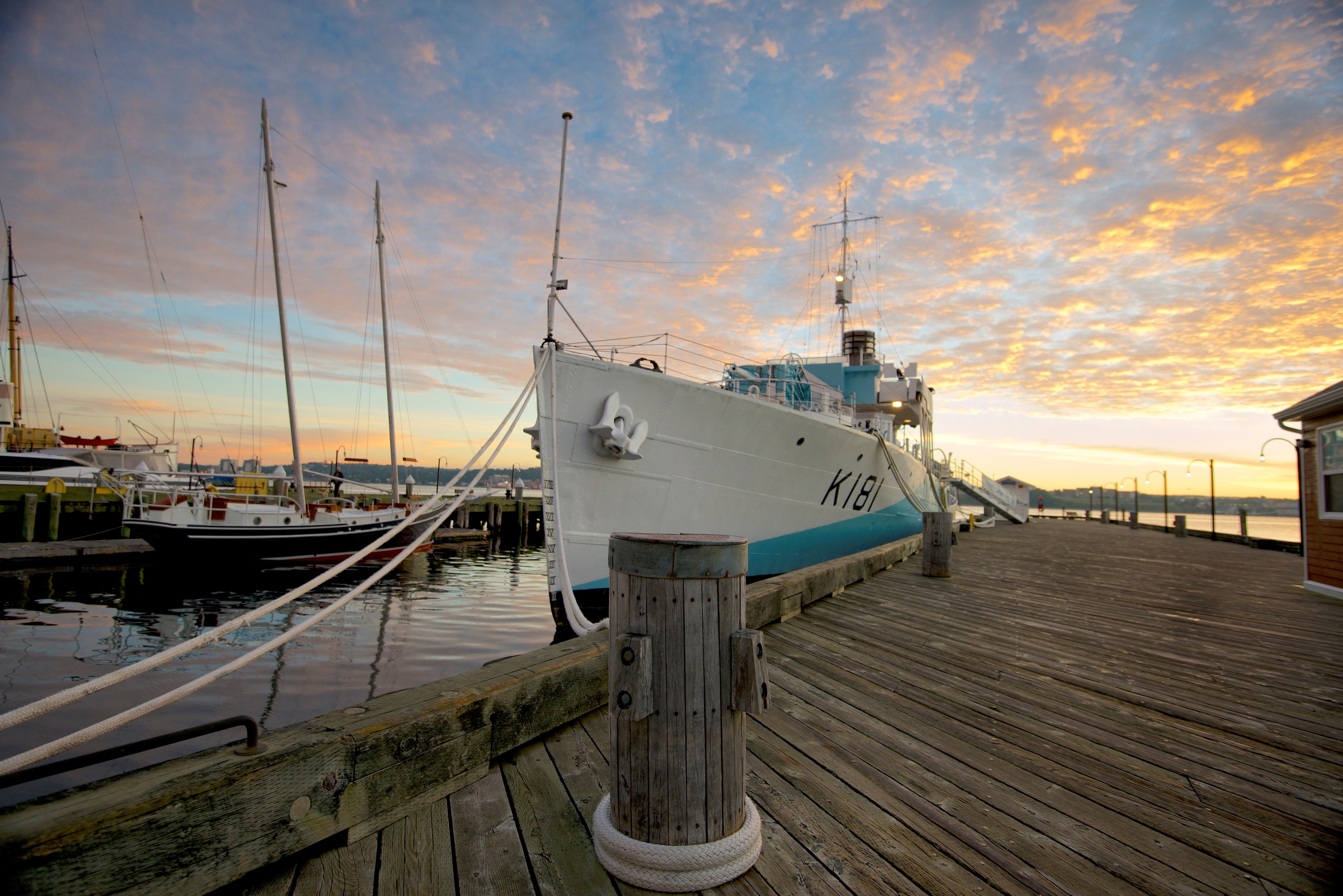


Amid the restaurants, crowds, and sea breeze of the Halifax Waterfront, a relic of wartime endurance lies at anchor. HMCS Sackville, the last Flower-class Corvette, carries the history of those who helped turn the tide in the Battle of the Atlantic.
Named after the town of Sackville, New Brunswick, she now rests here as Canada’s Naval Memorial, the only one remaining of the 274 allied vessels that once sailed for war.
Things to See and Do
As you explore the vessel, you’ll move through the many spaces and systems that worked together to keep her running as one cohesive unit.
At the bow stands the breech-loading four-inch gun, the Corvette’s primary weapon against surfaced U-boats. Without radar, targets had to be spotted entirely by the naked eye, even in rough seas or darkness. Ammunition could freeze solid in the Atlantic cold, a reminder of just how brutal the conditions were. Imagine standing on deck in that weather for hours, or even days. It’s a sobering thought while you’re onboard.
Learn how orders travelled from the bridge to the wheelhouse through voice pipes, the only way to direct the steerer, who had almost no visibility from their position at the wheel. At night, steering was done completely blind, guided only by orders, as even the slightest escape of light could reveal the ship’s position to the enemy. While in the wheelhouse, you can also study the charts that mark the Corvettes’ convoy routes across the Atlantic.
The sleeping quarters might offer the clearest glimpse into how rough sea life could be. These cramped spaces were crowded with hammocks, seats, and even cats, as some ships had a mascot to lift the sailors’ spirits.
The crew’s quarters were also where sailors ate, tried to rest, and found what little entertainment they could. Sharing such close quarters with so many others was uncomfortable at best; without a hammock, you might start the night in a seat and end up on the floor, soaked from the saltwater pooling as the ship rolled and pitched. Boarding her today, it’s hard to imagine that roughly 60 sailors once lived and worked in these cramped conditions.
Enduring these conditions day after day demanded not just physical stamina but mental grit to keep going in the face of exhaustion, cold, and monotony. You’ll also discover why the daily rum ration was the highlight of a sailor’s day, and how it served as currency on board.
The senior crew’s sleeping quarters show just how complex even simple tasks could be. It was the job of a junior-ranked sailor to bring meals down, a task that seems simple until you factor in the boat’s constant motion. Navigating narrow passageways while trying not to spill or soak the food, all under the watchful eyes of higher-ranking crew, made it anything but easy.
You’ll also discover some of the ship’s more technical features, each playing a critical role in keeping Sackville and her crew safe at sea. At the stern, the paravane is a minesweeping device used to protect the ship and the convoys she escorted through deadly underwater threats.
Planning Your Visit
Tours
- Tours are available and can be tailored to individual circumstances, ranging from 15 minutes to over an hour.
- Handheld audio devices in various languages are available to rent for self-directed tours.
- The tour highlights the realities of the Battle of the Atlantic, including frozen ammunition, blind steering, and crews packed into hammocks below deck.
What to bring
- Wear comfortable shoes, as the tour involves uneven decks and time on your feet.
- Dress for the weather: a hat and sunblock for sunny days, and a light jacket if showers roll in.
- Bring water to stay hydrated, especially during hot weather.
Insider Tip
Watch Greyhound, starring Tom Hanks, to see the ship in action. In the film, HMCS Sackville is portrayed as the ship Dicky. The filmmakers used a 3D scan of Sackville to create a digital model for her on-screen appearance.
Should Know
-
AccessibilityThe ship is a multi-level platform connected by ladders. Visitors with mobility issues may find exploring the ship challenging. Due to the uneven deck and the historic nature of the ship, accommodation for wheelchairs, walkers, and baby strollers is not available.
-
Duration2 hours